Vehicle Dossier · Mobility, Getaways, Street Presence
Gangster Mafia War: City Crime · Android Open-World Driving
Vehicles as Your Lifeline in Urbanmafiarun's Featured Case City
Cars and bikes in Gangster Mafia War: City Crime are more than background traffic. They are your escape routes, battering rams, and mobile cover whenever a job goes loud. Handling leans toward quick, arcade-style control, but vehicle choice still meaningfully changes how missions and free-roam encounters feel.
 Read Gameplay Breakdown
Independent review — Urbanmafiarun is not the official developer or Google Play.
Vehicle System Overview
Why Vehicles Sit at the Heart of Gangster Mafia War: City Crime
In this Android open-world, every major decision — where to start trouble, how to exit a mission, when to pick a fight — is tethered to what you are driving and how fast you can disappear.
Gangster Mafia War: City Crime builds its city around vehicles. You discover them organically in traffic, commandeer them when a quiet walk turns into a running gunfight, and upgrade your favourites as you climb through the game's progression.
Most of the time, you are hopping between compact city cars, agile motorcycles, and sturdier SUVs. Each brings a distinct rhythm: lightweight sedans are throwaway tools for grocery-run style errands, while chunky off-roaders feel like rolling safe rooms when you are expecting heavy resistance.
Because the game can be played offline, vehicles also function as pacing devices. Long drives between districts give you a moment to breathe, scan the map, and decide whether to keep pushing story missions or drift into side encounters. When something explodes behind you and you are already rolling, the sense of momentum and escape is stronger than simply sprinting around on foot.
Crucially, the vehicle roster is practical rather than flashy. You are not piloting supercars with sci‑fi gadgets; you are working with grounded street machines that feel at home amid neon signage, concrete overpasses, and alleyway shortcuts.
Vehicle Role in the Core Loop
Mobility
Fast access to missions, weapon vendors, and high-conflict zones.
Combat Support
Mobile cover, ramming, and quick repositioning during street fights.
Tension
Police chases and vehicle damage add risk to bold plays.
Progression
Upgrades translate progress into tangible, moment-to-moment power.
Showroom: Car Types & Utility
The Street-side Showroom: Sedans, Muscle, Bikes, and Workhorses
Instead of a formal dealership menu, Gangster Mafia War: City Crime turns the entire city into a rolling showroom. Traffic is your catalogue, and chaos is your test-drive.

Across regular play, you will see a practical spread of vehicle archetypes: everyday sedans, punchier muscle cars, nimble bikes, boxy vans, and heavier utility trucks. Each archetype nudges you into a slightly different playstyle, even though the overall handling model stays approachable.
Sedans & City Cars
These are the workhorses of the traffic grid. They are:
- Easy to find in almost any district
- Balanced between speed and control
- Disposable when a mission turns bad
Ideal for hopping between objectives or starting low-risk missions where you are unlikely to take sustained fire.
Muscle Cars & Performance Rides
When you catch something faster in traffic, it usually comes with:
- Stronger acceleration and higher top speed
- Looser handling that punishes sloppy turns
- More dramatic crashes if you misjudge traffic
They shine in planned getaways or timed missions, but ask more from your driving discipline.
Vans & Utility Trucks
These bulkier options trade speed for resilience:
- Higher durability against small-arms fire and light collisions
- Slower acceleration and more lumbering turns
- Better for missions where you expect roadblocks or ambushes
Think of them as mobile shields when you know you will be soaking damage.
Motorcycles
Bikes sit in their own category, covered in detail later, but broadly:
- Exceptional lane-splitting and alley access
- High risk during firefights and crashes
Perfect when you want agility over safety.
How Vehicles Shape Gameplay
Mission Outcomes, Free-roam Encounters, and the Car You Chose 30 Seconds Ago
In Gangster Mafia War: City Crime, the vehicle you are in often decides whether a mission devolves into an ugly foot chase or a clean, cinematic escape down the highway.
Before triggering a mission marker, it pays to think about what that job will likely involve. If you are expecting tight pursuit sequences or timed escapes, you will want something with strong acceleration and decent braking. If the objective is deep in hostile territory with plenty of crossfire on the way out, a tougher SUV or van is usually the safer bet.
Free-roam players benefit from treating the city almost like a mental vehicle atlas. Over time, patterns emerge: certain blocks reliably spawn tougher vehicles; other intersections are full of small cars that weave easily through traffic. Knowing where to run when things go wrong is a quiet strategic layer that unfolds as you learn the map.
Vehicles also affect how bold you feel starting trouble. Sitting in a fragile car makes you think twice about provoking a fully armed gang or staying in the open when the police response ramps up. In a sturdier ride, you can afford to push deeper into enemy turf before worrying about replacement wheels.
Vehicle Prepping for Different Mission Types
- High-speed chases: Prioritize acceleration and handling; muscle cars and lighter sedans work best.
- Escort or extraction missions: Choose vans or SUVs to survive sustained fire while you evacuate allies or loot.
- Ambush-heavy objectives: Any vehicle with decent durability and predictable braking helps when roads are partially blocked.
- Free-roam crime sprees: Starting in a sturdy vehicle gives you more room to improvise when law enforcement piles on.
If you like this level of planning, the Missions page breaks down objective structures and pacing in more detail.
Driving Mechanics & Handling
Arcade-weighted Handling Tuned for Touchscreens
Urbanmafiarun's featured game leans into simple, reactive driving. You are not here to simulate realistic suspension — you are here to yank the wheel through late-night intersections and survive to the next mission.
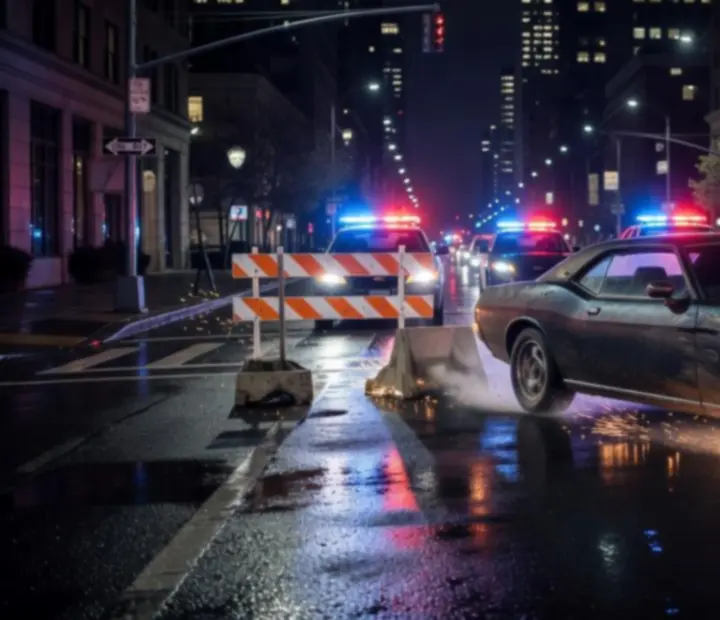
Chases favor responsive steering and quick course corrections over strict realism, which suits touchscreen play.
In the hands-on feel, vehicles in Gangster Mafia War: City Crime share a common foundation: quick steering response, assertive braking, and enough traction to pull sharp turns without constant spin-outs. That foundation anchors the driving system, and individual vehicle types then vary along four main axes:
- Acceleration: How quickly you launch from a standstill, critical when you are boxed in by hostile cars.
- Top speed: How fast you can pull away on longer straightaways or highways.
- Handling: How comfortably you can snake through traffic without overcorrecting.
- Durability: How many collisions, gunshots, and scraping encounters you can survive before the car becomes a liability.
Because this is an action game first, the physics engine sometimes produces slightly exaggerated reactions — cars may bounce more than expected, or a small collision might jolt you harder than a realistic sim would. The trade‑off is that the game rarely feels sluggish, even on smaller Android devices.
If you are new to touchscreen driving, the combination of simple controls and forgiving grip makes it easy to pick up. You will still get punished for reckless driving — damaged vehicles smoke, catch fire, and eventually become unusable — but the road to competence is short.
For a closer look at how steering, braking, and on-foot movement share the same control philosophy, you can cross-reference our Controls page.
Pursuit, Escape, and Police Chases
When Sirens Flip On, the Street Grid Becomes a Puzzle
The police system is not hyper-complex, but it is assertive enough that you cannot ignore it. Once officers are involved, your path through the city suddenly matters a lot.
Trigger enough visible crime — firefights in public places, collateral damage, prolonged shootouts — and police units join the fray. Once that happens, driving snaps into a different mode of thinking. You are no longer just going from point A to B; you are breaking line of sight, exploiting alley geometry, and using traffic as partial cover.
Effective escapes usually rely on three ingredients:
- Sharp cornering: Quick 90‑degree turns into side streets help you lose immediate visual contact.
- Alleyways and cut-throughs: Shortcuts that only smaller cars or bikes can handle reduce the number of pursuers that can physically follow.
- Destructible clutter: Scattered obstacles can be driven through to slow down the vehicles behind you, creating a rolling barrier.
Police vehicles do not behave like deeply simulated opponents, but they are persistent enough that reckless driving will catch up with you. Staying on wide, straight roads when under pressure makes you easy to track; ducking into the messier side of the map — loading docks, industrial corridors, residential backstreets — is usually the smarter move.
Practical Escape Playbook
- As soon as sirens start, scan ahead for the next two or three turns rather than focusing on raw speed.
- Use obstacles that slow pursuers more than they slow you — narrow gaps, breakable fences, and tight S‑bends.
- If your current car is badly damaged, consider abandoning it early and switching to a fresher vehicle mid‑chase.
- Once you have a bit of distance, ease off loud collisions to avoid drawing new attention.
The tension of these sequences is where the game feels most like a citywide cat‑and‑mouse hunt rather than a simple point‑to‑point drive.
If you mostly enjoy this type of pressure, the core Gameplay page explains how police encounters fit into the larger progression loop.
Motorcycles: Advantages & Trade-offs
Threading the Needle: Bikes as High-risk, High-control Tools
Motorcycles in Gangster Mafia War: City Crime are the closest the game comes to a "specialist" vehicle class — brilliant in the right hands, unforgiving when misused.
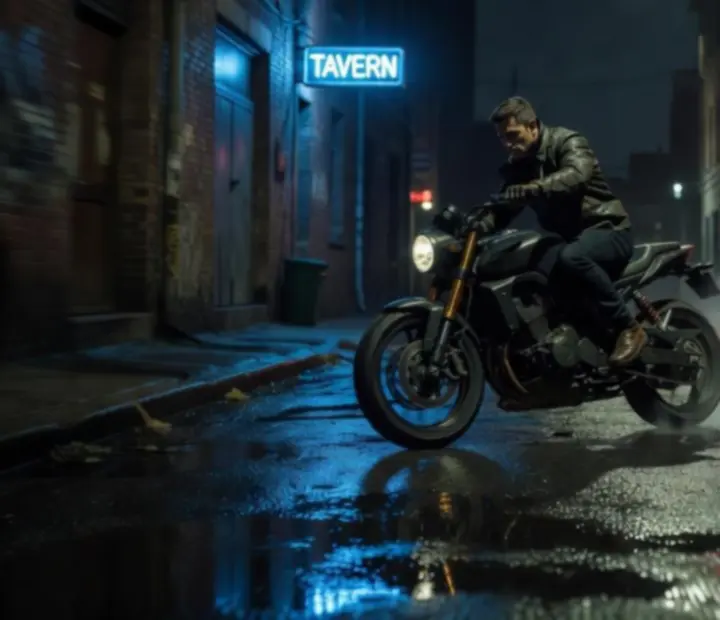
Motorcycles unlock routes and evasive lines that standard cars simply cannot fit through.
Bikes lean harder into agility than any other vehicle type. They accelerate quickly, pivot through narrow gaps in traffic, and can squeeze through alleyways that would be instant dead‑ends in a car. In a city built around tight corners and layered road networks, this makes them quietly powerful.
The flip side is fragility. Crashes that a sedan might shrug off can throw you badly off course on a bike, and you lack the reassuring metal shell that buffers incoming fire. During missions where enemies are likely to aim directly at you, riding a motorcycle can feel exposed.
When to Choose a Motorcycle
- Dense traffic, limited time: Bikes let you weave through congestion and stick closely to ideal GPS lines.
- Alley-heavy routes: Mission start points near tight backstreets are natural bike territory.
- Exploratory free-roam: If you are simply learning the map, bikes help you sample more routes per minute.
Reserve them for situations where your main enemy is the clock or the street layout, not overwhelming gunfire.
Vehicle Upgrades & Customization
Grounded Upgrades that Still Change How Confident You Feel
Progress in Gangster Mafia War: City Crime is not just about bigger guns. Tougher and faster vehicles are another way the game rewards repeat play and mission success.
As you push deeper into the game's missions and street clashes, you gain access to upgrades that influence how well your favorite rides hold up under pressure. The exact options vary by vehicle and progression tier, but they generally fall into a few clear buckets: added durability, better speed/acceleration, and visual tweaks.
While the customization system is more restrained than some other urban action titles, it does enough to make vehicles feel like repeat companions rather than anonymous tools. Incremental improvements are especially noticeable in missions you replay — a previously nerve‑wracking escape can feel surprisingly manageable once your ride is tougher and snappier.
Upgrade Categories and Their Impact
- Durability boosts: Let your favorite vehicles survive more collisions and incoming fire before failing.
- Acceleration and top-speed tuning: Shave seconds off timed runs and make highway escapes more decisive.
- Handling refinements: Subtle adjustments that reduce slide and improve turn‑in on tricky corners.
- Cosmetic touches: Visual tweaks for players who like their go‑to getaway car to stand out in traffic.
None of these turn the game into a pure car‑customization sandbox, but they do add a steady sense of ownership — especially when paired with your preferred weapons and character upgrades.
Vehicle Damage, Repairs & Loss
Every Dent Tells a Story — Until the Engine Gives Out
Vehicles in Gangster Mafia War: City Crime are consumable assets. Treat them as temporary tools, not permanent trophies, and you will adapt faster to the game's risk-reward rhythm.
Cars and bikes pick up visible and functional damage over time. Smash through too many intersections, soak up stray bullets, or get pinned during a police chase, and your ride will start to smoke, handle worse, or threaten to fail entirely. Push further, and it may catch fire or become undriveable, forcing you to bail out.
This fragility is not there to frustrate. Instead, it pushes you to read situations early. If your current vehicle is already limping and you are about to start a high-intensity mission, it is usually smarter to swap into something fresher nearby rather than gambling on a sickly engine.
Repairs and replacements are handled in practical ways: by switching into a healthier vehicle when one presents itself or by pulling in upgrades over the longer term. The point is not to simulate garage logistics; it is to keep you thinking about the state of your getaway plan.
Treat Vehicles as Disposable but Important
- Expect to abandon heavily damaged cars rather than nursing them indefinitely.
- Use quiet stretches between missions to "shop" for a fresh ride in traffic.
- Watch for warning signs like dark smoke or sluggish acceleration.
- In high-risk jobs, prioritize survival over sentimentality — no vehicle is irreplaceable.
This design keeps the driving system feeling dynamic. Instead of hoarding a single over-tuned car, you are constantly adapting to what the city gives you.
Vehicle Hotspots & Strategy
Learning the City's Sweet Spots for Fast and Tough Rides
Like any good open-world, Gangster Mafia War: City Crime quietly rewards players who pay attention to where the "good stuff" tends to surface. Vehicles are no exception.
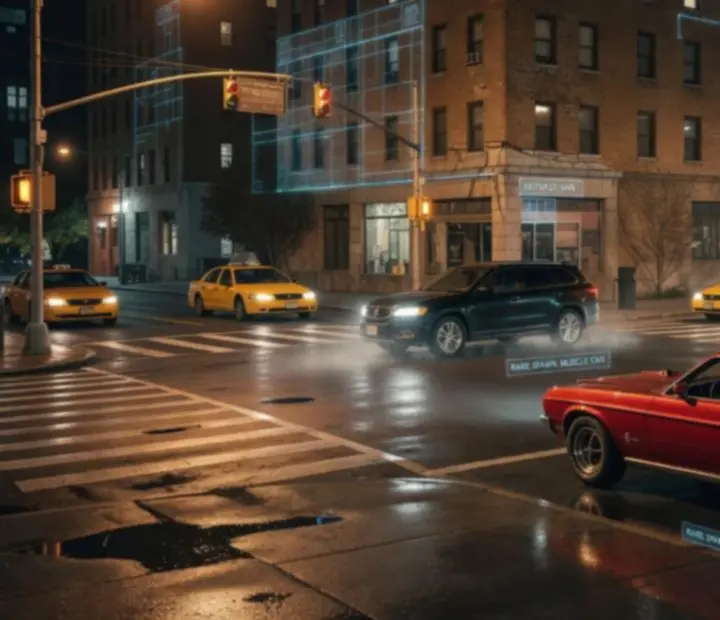
Certain intersections and neighborhoods consistently spawn stronger rides, making them natural staging grounds for risky missions.
As you loop through story missions and side jobs, you will notice that some neighborhoods reliably host more interesting vehicles. Maybe a commercial strip has tougher vans parked along loading zones, or an upscale stretch of road delivers faster sports-inspired cars more often than not.
These informal "vehicle hotspots" become part of your planning toolkit. If a mission marker is near one, you can stage a quick pit stop beforehand to secure better wheels. If objectives are far away, you may choose to detour through known hotspots before committing, trading a small time delay for a safer or faster getaway later.
Building Your Personal Vehicle Map
- Mentally tag intersections where you often find faster or more durable vehicles.
- Notice which mission start points sit close to these high-value zones.
- On repeat missions, refine your pre‑mission route to pass through a hotspot first.
- When playing offline, use quiet drives to scout and confirm your suspicions about specific districts.
This kind of lightweight "casework" — piecing together which blocks reliably give you better tools — is very much in line with Urbanmafiarun's investigative editorial framing.
Editorial Wrap-up
Who Will Appreciate Gangster Mafia War's Vehicle System?
The vehicle layer will not satisfy players expecting a pure driving simulator, but it does a lot of quiet work to keep the city feeling alive, responsive, and tactically interesting.
If you enjoy open-world games where vehicles are utilitarian tools — something you constantly swap, abuse, and discard on the way to the next shootout or objective — Gangster Mafia War: City Crime fits that mold. The arcadey handling makes short-session mobile play less frustrating, while differences between vehicle types still matter enough to reward planning.
On the other hand, if you are chasing deep simulation, with intricate driving physics and exhaustive customization, this title sits closer to the action‑first end of the spectrum. Vehicles support the story and combat rather than define them.
Best suited for players who:
- Like improvising escapes using whatever traffic offers.
- Enjoy light planning around mission entry and exit routes.
- Prefer responsive, forgiving driving over strict realism on mobile.
- Appreciate vehicles as part of a broader combat and exploration loop.
Continue to Editorial Verdict
This site is an independent review resource and is not the official game developer or Google Play.