Mission dossier • Gangster Mafia War: City Crime

How Gangster Mafia War builds its missions, one street at a time

From story operations to repeatable contracts, mapped across a restless urban grid

Urbanmafiarun • Missions

In Gangster Mafia War: City Crime, missions are the spine that holds the open-world chaos together. You are constantly bouncing between story-driven jobs, contract side work, and improvised escapes as police and rival gangs collide around you. This page traces how those assignments are structured, what they feel like to play, and where the design really comes alive.

Get it on Google Play Read gameplay breakdown

Independent coverage • No APKs, mirrors, or alternative stores – we only link to the official Google Play listing.

Mission Structures

How Gangster Mafia War structures its jobs across the city

Gangster Mafia War: City Crime is built around a mix of linear story operations and free-form contracts spread across its map. You are never just wandering – there is almost always a job to accept, a route to trace, or a payoff waiting one block over.

Main vs optional work

The game splits its assignments into two broad categories. Story missions are the authored spine: they pull you through key districts, introduce important characters, and regularly escalate the pressure. Optional contracts sit around that spine like loose cash jobs: vehicle thefts, escort gigs, supply drops, and quick gang clashes that you can pick up when you want to grind for currency or gear.

In practice, you will jump between them. A typical session might see you clear a story operation that unlocks a new neighbourhood, then circle back into repeatable contracts in that same district to afford a better weapon or faster bike before facing the next big mission.

Assignments generally appear as map markers or triggers when you move close enough. This keeps the city feeling populated without overwhelming the screen with icons, though it also means you occasionally have to cruise an area to rediscover a contract you liked.

  • Main missions move the plot forward and unlock new spaces.
  • Contracts repeat, giving you a way to rebuild health, ammo, and wallet.
  • Some missions chain together, asking you to complete several tasks in one stretch.

Timeline of a Typical Mission

From phone call to getaway: inside one full mission run

Most missions in Gangster Mafia War follow a recognisable rhythm, even when the details change. Understanding that rhythm helps you prepare the right vehicle, route, and mindset before you ever cross the starting line.

1. Contact and briefing

Missions usually start with either a short cutscene, a phone-style call, or an on-screen prompt as you approach a marker. The tone is straightforward: a brief explanation of what needs to be done, who is involved, and the rough area of the city you are heading into. The game rarely over-explains, which keeps things moving but leaves much of the story flavour to quick lines and implied stakes.

2. Approach and setup

Once the objective is marked, you choose how to approach. In quieter missions, you can arrive with some distance, park out of the main road, and move in on foot. In higher-pressure assignments, you may find enemies or police already in motion, pushing you directly into a moving chase or ambush. This approach phase is where map knowledge matters: knowing which bridge avoids a choke point, or which alley gives you cover, can decide whether the mission opens clean or messy.

3. Objective execution

Inside the objective zone, the game layers driving, shooting, and quick tactical choices. You might need to tail a car without getting spotted, clear a small yard of hostile gang members, escort an ally through traffic, or smash a getaway vehicle out of a locked garage. The missions generally lean on straightforward mechanics, but the mix of city layout, enemy placement, and time pressure keeps them from feeling static.

4. Escape and aftermath

Very few missions end politely. Once the main task is complete, the game often throws a last-minute twist: a pursuing gang car, a police cruiser that has picked up your trail, or a simple timer asking you to leave the area before backup arrives. The final stretch becomes an improvised escape, with you weaving around traffic, sliding into side streets, or doubling back across the same intersections you just fought over. Only after you create distance and reach the drop-off point do you see your rewards tally and unlock notifications.

Story Missions

The narrative spine: city-shaping operations without spoilers

Story missions are where Gangster Mafia War: City Crime pushes its world forward. They unlock new districts, escalate the threat from rival gangs, and gradually reveal who really controls which corner of the map – all without requiring you to read walls of text.

Each story mission feels like a case file being pulled from a drawer: limited in scope, but important to the overarching network. Early operations usually teach mechanics in context – how to handle a basic chase, how to survive a crossfire at an intersection, or how to guard an ally during a slow drive-by through hostile streets.

As you progress, these missions stretch across more of the city. A job might start in a familiar neighbourhood, then force you to cut through industrial docks you have only glimpsed in the distance, before dropping you into a climactic shootout in a cramped back lot. The constant motion between zones means story missions double as guided tours of new districts.

Without spoiling specific twists, expect the narrative to revolve around shifting rivalries between gangs, opportunistic deals, and the consequences of previous jobs. Characters often reappear in later missions, carrying the impact of your earlier actions forward in ways that are simple but effective for a mobile title.

If you are the type of player who values a sense of progression, these missions are non-negotiable. They unlock not only new scenes, but often new weapons, vehicles, and opportunities that shape the way the open world feels when you go back to free roam or contracts.

Optional Contracts

Contracts that keep the streets paying your bills

Beyond the narrative spine, Gangster Mafia War: City Crime scatters smaller jobs across its map – quick hits you can replay to keep your wallet, ammo, and confidence topped up.

What contracts look like in practice

Optional contracts are usually simpler and more repeatable than story missions. You might be asked to grab a specific car from a guarded lot, deliver supplies across town before a timer runs out, or clear a small gang presence from a crossroads. These jobs tend to reuse familiar areas, but the combination of traffic, police, and enemy behaviour keeps them from feeling identical.

Because contracts can be re-run, they function as your main tool for stabilising progress. Failed a story mission and realised your current weapon feels weak, or your car struggles to outrun pursuing bikes? Running a few contracts can quickly provide the currency needed to upgrade your loadout before you try again.

Why contracts matter for different player types

If you are a completionist, contracts offer a satisfying way to squeeze more value out of each neighbourhood. You can experiment with alternate routes, different vehicles, or more cautious approaches to see how they change the risk profile.

If you are more casual and just want a quick burst of action, contracts are easy to drop into. Many of them are short enough to complete in a spare few minutes, especially useful when playing offline during a commute or break.

Either way, they help the city feel alive between the headline missions – a steady hum of work that says there is always another street-level job if you are willing to take it.

Mission Types & Objectives

Chases, infiltrations, and everything in between

While Gangster Mafia War: City Crime relies on a familiar toolbox of mission archetypes, those archetypes are shuffled enough to keep the experience varied across a long playthrough.

Chase sequences and timed escapes

Chase missions are some of the most immediate: you either pursue a fleeing target through traffic or try to maintain distance from those chasing you. These jobs emphasize car control and route choice, with quick decision-making at turns. Timed escapes are similar, but instead of a specific opponent, your main enemy is the clock and the city layout itself.

Ambushes, retrievals, and boss-style encounters

Ambush missions drop you into crossfires or sudden confrontations, forcing you to use cover and the edges of the environment. Retrieval runs ask you to grab an item or vehicle and survive the trip out. Occasionally, the game frames an encounter almost like a boss fight, pitting you against tougher opponents or a heavily guarded objective that demands more precise positioning and movement.

Stealthy infiltrations and escort work

Stealth missions in Gangster Mafia War are rarely complex in a systemic sense, but they do ask you to think about line of sight, noise, and alternative entry points. Escort-focused missions shift your attention to keeping an ally or vehicle intact, pacing your movement so you are not outrunning what you are supposed to protect.

The combination of these mission types means no single mechanic dominates for too long. If you get burned out on straight firefights, you can lean into chases or contracts that centre on driving. If you prefer using the city as a maze, stealthy infiltrations and retrieval runs reward players who pay attention to side streets and shortcuts.

Notable Mission Locations

From neon arteries to dockside dead ends

The mission design in Gangster Mafia War works best when it leverages the variety baked into its city. Different districts push you toward different tactics, even when the basic objective is familiar.

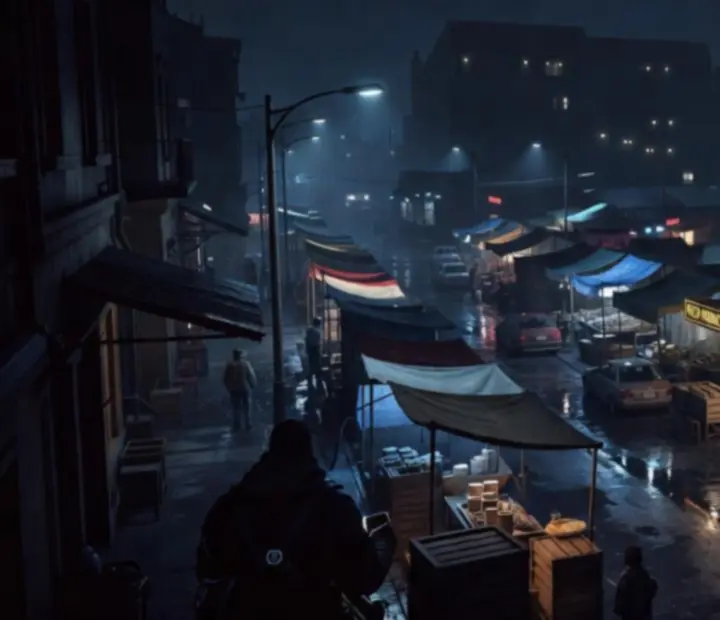
Night-time mission location in Gangster Mafia War: City Crime, with neon-lit avenues and dense buildings
Night missions run through neon-lit avenues and shadowy industrial zones, giving each assignment a distinct backdrop even when objectives repeat.

Districts and how they play

Neon-lit avenues: These main streets invite speed. Wide lanes encourage high-velocity chases, but also expose you to more traffic and long sightlines from enemies. If you rely on raw acceleration, this is where you can shine – or crash.

Industrial docks: Docks are usually tighter, with stacked containers, narrow pathways, and blind turns. Here, slower and more deliberate driving pays off, and on-foot segments feel more dangerous but also more controllable, since you can use cover heavily.

Crowded markets: Market-style areas crowd the screen with obstacles and pedestrians. Missions in these spaces reward quick steering corrections and modest speeds rather than maximum throttle. They can also make stealth-style approaches more feasible, because the density of props breaks up long sightlines.

Back-alley garages and side streets: These tucked-away locations often hide the critical part of a mission – a stolen car, a target to eliminate, or a cache to retrieve. They are also your best friends during escapes; knowing which alleys loop back into safer routes is a huge advantage during high heat.

Over time, you start reading the city like a tactical map: certain corners become natural choke points, others become habitual escape routes. This mental map is a big part of what keeps repeat missions from feeling flat.

Adapting to Police Encounters

When law enforcement crashes your carefully planned job

Police presence in Gangster Mafia War: City Crime adds a second layer of tension on top of gang rivalries. It is not always active, but when it appears mid-mission, your priorities change fast.

Dynamic threat levels during missions

Many missions can technically be completed without drawing heavy police attention, but aggressive driving, stray shots, and extended firefights raise your profile. Once patrol cars or officers enter the picture, the assignment becomes a balancing act between finishing the job and breaking contact cleanly enough to avoid getting overwhelmed.

Police chases usually feel different from gang pursuits. They are more persistent and less tied to a single vehicle. You may shake one car only to find another joining the chase a few blocks later. This makes long, straight runs less reliable than weaving through tighter side streets where line of sight can be broken.

Adapting your strategy on the fly

If you see police arriving mid-mission, it is often smarter to adjust your goal rather than stubbornly follow your original route. Cutting through an industrial zone, ducking into an alley, or briefly abandoning a vehicle to move on foot can all reduce attention long enough to regroup.

Some players will find this extra layer thrilling; others may see it as noise added to already busy missions. Either way, being ready to switch from “clean getaway” to “desperate evasion” is part of the game’s identity. It helps missions feel less like scripted corridors and more like problems unfolding across a live map.

Progression Through Missions

How clearing jobs reshapes your arsenal and routes

Missions are not only about the thrill of a successful getaway. In Gangster Mafia War, they are your primary pipeline for experience, new tools, and expanded access across the city.

Every finished assignment pays out in some combination of currency, experience, and unlock progress. Over time, this unlocks stronger weapons, more durable or faster vehicles, and occasionally new mission variants that lean on the toys you have acquired.

This progression curve is what turns early, scrappy jobs into more deliberate operations. With better firepower, what was once a risky street confrontation can be handled more confidently. With a faster car or bike, tight timers become manageable, and police chases feel less like inevitable failures and more like tactical puzzles.

Importantly, the game does not strictly gate enjoyment behind upgrades. You can technically attempt many missions with basic gear, but doing so will raise the challenge and may force you into more careful play. If you prefer a smoother ride, rotating through contracts to build up your arsenal before tackling major missions is a sensible approach.

Dossier: Rival Gangs

The factions shaping your mission experience

Rival gangs in Gangster Mafia War: City Crime are more than just faceless targets. Their presence influences which vehicles you face, how firefights play out, and how dangerous certain districts feel.

Across missions, you repeatedly cross paths with different gang factions that occupy various corners of the city. Each group leans on slightly different mixes of vehicles, weapons, and aggression levels. Even without elaborate backstory, you start to recognise which missions are likely to be chaotic shootouts and which will skew more toward fast-moving vehicle battles.

Some gangs rely heavily on bikes and lighter vehicles, making them nimble in traffic but also more vulnerable to a few precise hits. Others show up with heavier cars, making ramming and blocking tactics more common. In dense districts, this can quickly turn narrow streets into clogged obstacle courses where staying mobile is as important as firepower.

Missions often chain encounters with different factions, especially as the story escalates. You might start a job clearing a smaller crew from a corner lot, only for a better-equipped group to intervene as you escape. This layering creates a sense that you are interfering with a city-wide power struggle, rather than just completing isolated tasks.

Mission Difficulty & Replay

Balancing challenge with repeatable paydays

Mission difficulty in Gangster Mafia War is rarely punishing at the start, but it ramps up as you move deeper into the city and unlock higher-stakes assignments.

How tough are missions, really?

Early missions serve as a tutorial hidden inside the narrative: timers are generous, enemy numbers are modest, and escape routes are straightforward. As you progress, missions layer more enemies, busier roads, and tighter timers on top of that foundation. The game leans toward moderate challenge overall – enough to demand focus, but rarely so punishing that you are locked out of progress for long stretches.

Because combat is fast and driving can be twitchy on touch controls, some mid-game missions may require a few attempts while you learn where enemies spawn or which intersection is safest. Players familiar with mobile action titles will likely settle into the rhythm quickly; newcomers may need a little more patience.

Why replaying missions can be worthwhile

Replay value comes from two angles: rewards and experimentation. Many missions can be replayed to squeeze out extra currency or simply test alternate routes and approaches. You might run a familiar job with a different vehicle, choose a stealthier entry, or push yourself to beat a previous completion time.

That said, there is some repetition baked in. Contract missions especially can start to blur together if you grind them too aggressively. The saving grace is that the city itself introduces enough variables – traffic, police, and your evolving gear – that repeating a mission rarely feels like an exact copy of the last attempt.

Mission Rewards & Unlocks

What you actually earn when the dust settles

Behind every tense getaway is a set of numbers quietly ticking upward. Gangster Mafia War uses mission rewards to connect your time on the streets to meaningful improvements in gear and options.

Successful missions typically pay out a mix of in-game currency and progression toward new equipment. Story operations often carry larger, one-time rewards, while contracts produce smaller but more frequent income streams you can rely on when gearing up.

These resources feed into weapons, vehicles, and occasionally cosmetic touches. The emphasis is on practical power rather than flashy vanity items: better guns, sturdier cars, and more capable bikes all translate into more forgiving missions later on.

This loop encourages you to keep pushing into new assignments rather than endlessly circling the same low-level contracts. The clearest path to better unlocks usually runs through fresh story content, with contracts acting as the safety net when you need a boost.

Tips for Success

Street-level advice for surviving your early cases

Gangster Mafia War does not demand perfection, but a few habits make its mission structure feel much smoother – especially when you are still learning the city.

1. Prioritise early story missions

Early story missions unlock crucial city segments, gear, and mission varieties. Rather than grinding the very first contracts repeatedly, push the narrative spine forward until you have at least a couple of districts and a small set of upgraded weapons and vehicles to rely on.

2. Treat the city map like a living tool

Do not just follow the waypoint blindly. Use the map and your own memory to chart alternates: a back road that bypasses a busy intersection, a side alley that connects two main streets, or a dockside route that keeps you away from police patrols. These shortcuts can turn a near-failure into an easy success.

3. Maintain a stable contract route

Identify one or two contracts that you find comfortable and reliable. When a tough story mission knocks you back, fall onto those jobs to quickly rebuild funds and confidence. Familiarity with their layout makes them faster and less stressful every time.

4. Respect your getaway vehicle

It can be tempting to grab whatever car is closest, but investing in and sticking with a preferred vehicle gives you consistent handling. You will learn exactly how it corners, accelerates, and responds under pressure – knowledge that matters when the police join the chase or a timer is ticking down.

5. Play to your strengths

If you handle driving better than precise shooting, favour missions where chases and deliveries dominate. If you are more comfortable using cover and crossfires, lean into assignments that put you on foot. The open-world mission list is broad enough that you can tilt your time toward the style that feels best.

Editorial Analysis

Are Gangster Mafia War's missions genuinely engaging?

This is the part where we stop just describing the structure and talk frankly about how it feels to live inside these assignments for hours at a time.

Our take: a dense mix of highlights and repetition

Urbanmafiarun is an independent review site – we are not the developer and we are not Google Play. What follows is an editorial impression, not marketing copy.

Missions • Analysis

At their best, the missions in Gangster Mafia War: City Crime feel like compact crime episodes: you grab a job, trace a route across town, improvise through a scuffle or chase, and then melt back into traffic with your reward. The constant switching between driving and combat, layered over a city that keeps throwing new corners and bottlenecks at you, gives the experience a strong sense of momentum.

The variety of mission types – chases, infiltrations, escorts, quick gang skirmishes – does enough to keep fatigue at bay in the early and mid-game. Police interference in particular adds welcome unpredictability, turning otherwise routine deliveries into tight escapes when a patrol appears at the wrong moment.

There is, however, an element of repetition you will notice if you stay with the game for many sessions. Contracts, by design, reuse similar layouts and objectives. Even some story missions lean on familiar patterns: drive here, clear this area, escape through a slightly different exit. The city does a lot of heavy lifting to keep those loops feeling tense, but structurally you are often performing variations on a theme.

Whether that repetition bothers you depends on what you seek from the game. If you want an endlessly surprising narrative campaign, you may find the mission design more functional than groundbreaking. If you enjoy tightening your lines through the same intersections, refining your routes, and seeing how far you can push a familiar job with better gear and cleaner driving, the repetition becomes part of the appeal.

From an editorial standpoint, the mission system succeeds at what it aims for: creating a reliable, replayable backbone for open-world action on mobile, with enough tension to keep short sessions engaging. It does not radically reinvent the formula, but it understands the strengths of its city and builds around them. For many Android players – particularly those interested in offline open-world action with a clear sense of progression – that will be more than enough.

Strengths: City use, chase tension, clear structure Limitations: Pattern repetition over long playtimes

If you want to see how these mission strengths and weaknesses factor into the bigger picture, the Editorial Verdict page connects them to controls, performance, and overall value.

Get it on Google Play

You will be taken to the official Google Play listing for Gangster Mafia War: City Crime. Urbanmafiarun does not host downloads or sell the game.