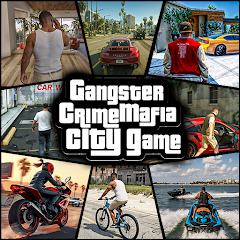
Case file: Night City Open-World
Urbanmafiarun on Gangster Mafia War: City Crime
Street-level chaos with handheld control – not a crime epic, but a focused urban action sandbox.
Gangster Mafia War: City Crime drops you into a compact, combat-heavy city where the rhythm is simple but punchy: roam the streets, pick a mission, stir up trouble, outrun sirens, upgrade your tools, repeat. It feels closer to a pick-up-and-play street skirmish simulator than a grand story, with the freedom to push your luck in short offline sessions.
 Read full verdict
External link goes only to the official Google Play page. Urbanmafiarun is not affiliated with the developer or Google Play.
Case summary
Quick Verdict & Editorial Seal
A spoiler-free snapshot of what Gangster Mafia War: City Crime actually feels like to play on an Android phone: its strengths, its limits, and where it fits in the open-world crime genre.
Gangster Mafia War: City Crime is best understood as a lean, street-level open-world game. You are not here for branching morality systems or intricate dialogue trees. You are here for fast access to chaos: jumping into cars, starting firefights, outrunning police, and repeating that loop across a dense, arcade-like city.
The missions are straightforward and often familiar – escorting allies, eliminating rival crews, surviving ambushes, or escaping manhunts – but they do a consistent job of pushing you around the map and nudging you into new corners of the city. The result is a game that thrives on repetition and improvisation rather than narrative surprise.
Moment-to-moment play leans into quick reflexes and comfort with touchscreen aiming. There is tension in every chase and every street crossing when the alert level is high, yet the stakes remain manageable enough for short commutes or breaks.
As an offline-friendly action sandbox, it succeeds at delivering that specific fantasy: slipping into a rough urban district, stirring up trouble, and seeing how long you can stay ahead of everyone who wants you gone.
Orientation
Game Overview: Street Survival Unveiled
Before you commit storage space and time, it helps to know what kind of urban experience you are walking into – and what you are not.
Gangster Mafia War: City Crime positions you as a lone operator in a modern city carved into gang territories and patrolled by police. The core fantasy is simple: live on the edge of the law, accept risky work, and survive the fallout when everything goes loud.
The city is built as an open playground rather than a purely mission-to-mission corridor. You can idle between high-rises, check your map for the next story marker, or just wander until you find a vehicle to steal or an enemy patrol to provoke. That open structure matters because it gives you permission to choose your own pace: heavy action or quiet scouting.
Story threads exist, usually framed as clashes between rival gangs, protection jobs, or taking territory. They give you context without demanding your full attention; this is a game you can comfortably play with a podcast in the background if you wish. The real texture comes from how you move through the city and manage the tension between greed (more rewards) and survival (knowing when to retreat).
Urbanmafiarun’s coverage is fully independent. The opinions on pacing, difficulty, and design trade-offs are based on observing how the game feels after the novelty of the first few missions wears off, not on marketing copy or promises.
At a glance
- Open-world city built for roaming, hijacking vehicles, and on-foot combat.
- Story and side missions that escalate conflict with rival gangs and law enforcement.
- Police response system that turns sloppy jobs into high-speed escapes.
- Weapons and gear progression that pushes you toward riskier encounters.
- Designed to be playable offline after installation, making it suitable for travel or low-signal commutes.
For a broader structural breakdown of how the game keeps you circulating through the same city streets, head to the Overview and Editorial Verdict pages.
Moment-to-moment play
Gameplay Loop Breakdown
What you will actually do in Gangster Mafia War: City Crime during a typical 30-minute session.
1. Leave safety and scan the streets
Most sessions begin at a relatively calm spot – a base, alley, or low-traffic corner. From there, you pick a direction and start moving. Icons on the map signal potential missions, weapons, or vehicles, but you are free to ignore them and just prowl. Early minutes are often about getting a feel for traffic flow, enemy placement, and which vehicles are worth grabbing if a chase starts.
2. Commit to a mission or create your own trouble
Formal missions tend to cluster around a few templates: confront a rival group, protect an ally, retrieve a vehicle, survive an ambush, or cause a distraction. You choose which marker to pursue. Alternatively, you can hijack a car, drive into enemy turf, and provoke a fight – effectively turning free-roam into your own improvised objective.
3. Survive the encounter – or escalate it
Once weapons are out, the loop pivots around cover, line-of-sight, and awareness of who is joining the fight. Enemy gang members and police can arrive from multiple angles. Because combat is tuned for quick bursts, it pays to move aggressively, grab better cover, and keep an escape vehicle in mind – especially when sirens begin to layer over the soundtrack.
4. Escape, reset, and cash in
If you survive and manage to shake pursuit, the game gives you space to breathe. You collect rewards, check your ammo, and maybe visit a point of interest to upgrade weapons or replenish supplies. This reset is essential: it is the moment where you decide whether to push back into danger immediately or cool off with some lighter exploration.
5. Gradual progression pulls you back in
Over time, your arsenal and confidence grow. Missions that once felt punishing become manageable, and you start deliberately provoking larger chases to test the limits of the city's systems. That mix of incremental power and escalating risk is the backbone of the game's replayability.
For a deeper look at how each piece of this loop is tuned – including difficulty spikes, enemy AI tendencies, and mission pacing – see the dedicated Gameplay page.
Urban sandbox
Explore the City: Urban Sandbox & Atmosphere
The streets are more than a backdrop; they define the way chases unfold, where you can hide, and how each mission feels.
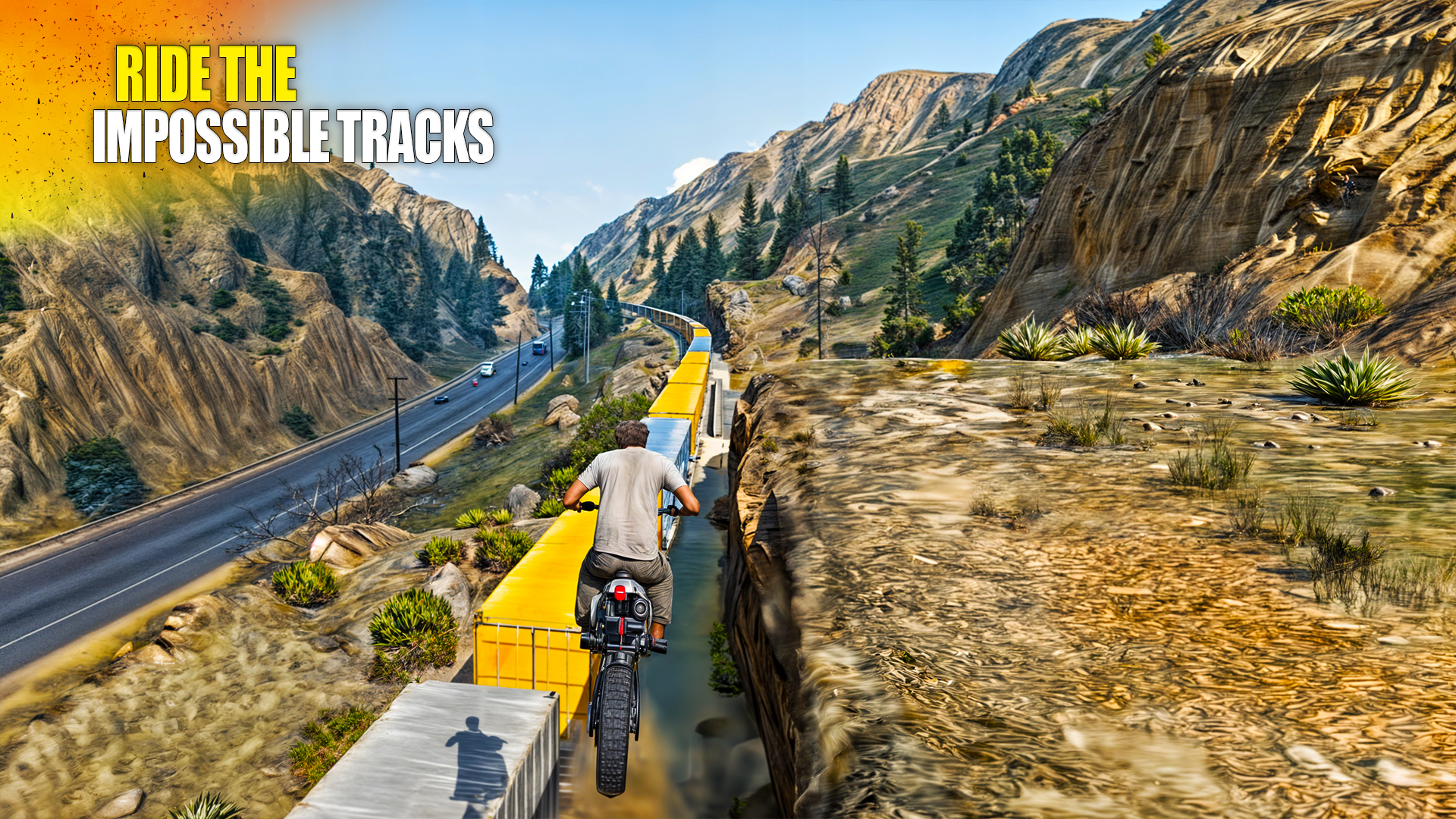
City blocks form a tight maze of main avenues, side streets, and alleys that shape every chase and firefight.
The map is not the largest in the mobile open-world space, but it is dense. Districts bleed into each other quickly: commercial strips with bright signage give way to quieter residential streets, then to industrial pockets and dock-like fringes. That tight layout keeps travel times short and action frequency high.
Major roads act as arteries for car theft and long chases, while side streets and alleys are your lifelines when police pressure spikes. Memorizing a few key cut-throughs – a service lane behind a row of shops, or a diagonal alley between apartment blocks – can be the difference between escape and a quick defeat.
Safe-ish spaces exist: corners where patrols rarely wander, or dead-end courtyards where you can regroup. They are rarely marked as explicit “safehouses,” but over time you build a mental map of fallback points where you can turn off the pressure, reload, and plan the next job.
Atmospherically, the game leans heavily on night-time lighting. Street lamps, car headlights, and storefront glows do much of the visual work. It creates a mood that sits somewhere between gritty and arcade-like – you always feel watched, but the exaggerated lighting makes it readable even on smaller screens.
For mission-by-mission examples of how the city layout is used, head to the Missions page. Vehicle-specific handling in different districts is broken down on the Vehicles page.
Escalation
Missions & Timeline: Escalation of Crime
From simple errands to high-intensity stand-offs, the mission structure steadily raises the stakes without giving away key story twists.
Phase I – Street-level errands
Learning the grid under low pressure
Early jobs are short and forgiving: reach a contact, retrieve a vehicle, rough up a small group of enemies, or escort someone across a couple of city blocks. These are your orientation hours, exposing you to key junctions, choke points, and the basics of dealing with hostile groups.
Phase II – Territory tension
Clashes with rival gangs
As you progress, missions begin to stitch together a loose tapestry of gang rivalries. Without spoiling specifics, expect a pattern of retaliation: each successful attack or defense nudges another faction to respond. This stage teaches you how quickly a tidy job can spiral when enemies fight back in waves or flank from new directions.
Phase III – Siren season
Police alert levels and survival runs
Once you are comfortable with basic combat, the game increasingly forces you to think about the law. Certain missions virtually guarantee a police response, turning the second half of the objective into a chase or a last-stand defense. Managing your escape routes and vehicle choices becomes as important as your aim.
Phase IV – High-risk operations
Layered encounters with thin margins
Later content stacks complications: time pressure, multiple objectives in different districts, or missions that start as a simple exchange and end in a chaotic running battle. These sequences are where your knowledge of the city and your upgraded arsenal pay off.
For spoiler-free mission archetypes, recommended early routes, and where the difficulty spikes, see the dedicated Missions dossier.
Street machines
Driving, Vehicles & Police Chases
How it feels to steal a car, thread through traffic, and keep your distance from flashing lights.
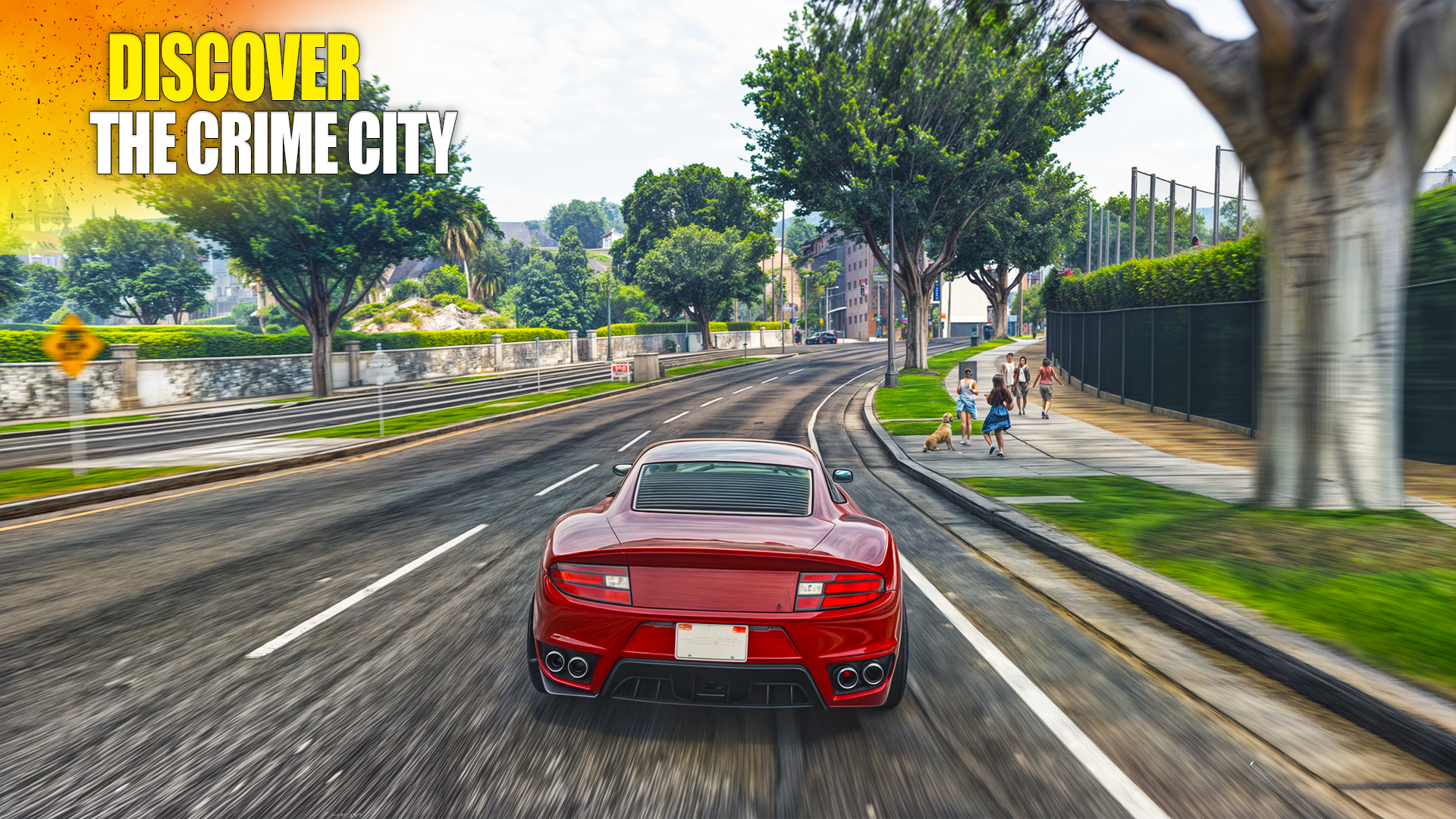
Cars handle differently from bikes, and knowing when to switch can decide whether you outrun or get boxed in.
Vehicles are the backbone of the game's pacing. On foot, the city feels dangerous but contained; in a car or on a bike, distances compress and the risk curve spikes. Even a short drive can turn into a tense evasion run if you clip the wrong car or fire at the wrong moment.
Cars generally feel heavier and more stable. They are better for smashing through roadblocks or absorbing gunfire, but their bulk makes tight alley escapes more difficult. Bikes, by contrast, excel at weaving between cars and slipping down narrow paths, but demand steadier hands and carry more risk during high-speed cornering.
Chases often unfold in stages. You might start on a wide avenue, cutting between lanes, then dive into a side street, then bounce across a small plaza or cut behind buildings. The game encourages you to improvise rather than follow GPS-perfect routes, which keeps repeat escapes interesting even when you know the map well.
Destructibility is mostly functional: expect vehicles to crumple and eventually fail if you treat them like battering rams. That limitation forces you to occasionally abandon a burning car and continue on foot or switch to a fresh vehicle mid-chase – risky, but cinematic when it works.
Handling quirks, recommended vehicle types for different mission archetypes, and chase survival tips are expanded on the Vehicles page.
Weaponized streets
Combat Mechanics: Action, Arsenal, and Encounters
Non-graphic, mechanics-focused coverage of how fights play out – and how much precision the touchscreen controls demand.
The combat in Gangster Mafia War: City Crime is built for rhythm rather than simulation.Enemies tend to arrive in small waves, take basic cover, and trade fire with you from predictable angles. This makes shootouts readable, if sometimes repetitive, and lets you focus on positioning rather than micro-managing complex weapon options.
Weapons progress from basic sidearms to more capable rifles and heavier tools. Each step up expands the distance or density of fights you can comfortably handle. The game rarely forces you into highly specialized loadouts, so you can usually lean on a favourite setup as you progress.
Touchscreen aiming is serviceable but demands comfort with virtual sticks. Expect a learning curve as you calibrate your sensitivity and get used to controlling the camera, aiming, and movement all at once. Once dialed in, engagements feel brisk: enter, clear, move.
Encounters often mix gangs and police, especially once the alert level rises. This layering can create interesting micro-decisions: do you push forward to end the fight quickly, or fall back and break line-of-sight to let some of the pressure reset?
Pacing-wise, the game leans toward frequent, short battles instead of rare, elaborate set pieces. That approach fits its mobile roots: you can complete a couple of missions or free-roam clashes during a short break without feeling like you have abandoned a half-hour engagement.
Challenge-wise, the early game is forgiving. Later, enemies hit harder and appear in greater numbers, but the difficulty curve feels more about crowd control and positioning than about perfect headshots. If you are comfortable with other mobile action games, you should find the learning curve fair.
Control options, recommended sensitivity ranges, and accessibility considerations are examined on the Controls page, while difficulty spikes are discussed in more detail in the Editorial Verdict.
Long game
Progression & Replay Value
Why keep running the same streets after the first evening – and what changes each time you do.
Progression in Gangster Mafia War: City Crime is primarily about upgrading your capacity for chaos. Completing missions and surviving tough encounters typically earns you currency or unlocks that translate into better weapons, sturdier vehicles, or improved survivability.
This forward motion matters because the city itself does not radically transform; what changes is how confidently you move through it. Districts that once required cautious advances become arenas where you can experiment with bolder plays, like confronting larger groups or inviting police attention to stress-test your build.
There is also a quieter form of progression: mastery of routes and rhythms. Knowing where the nearest sturdy car tends to spawn, which alleys are dead ends, and how patrols behave in specific neighbourhoods makes the city feel increasingly like familiar territory.
Replay value comes from combining that knowledge with your upgraded toolkit. Even when you replay similar mission templates, you can approach them in different ways: delayed confrontation, long-range engagement from elevated positions, aggressive vehicle-based tactics, or stealthier openings before things inevitably escalate.
If you are the kind of player who enjoys “just one more run” loops – quick, high-risk excursions with clear rewards – this structure will likely resonate. If you prefer heavily scripted, one-time story moments, the repetition may feel more noticeable.
For guidance on early-game priorities and how to avoid spreading your upgrades too thin, see the beginner-oriented notes and recommendations on the Overview and Verdict pages.
On-device feel
Controls, Performance, and Technical Experience
How the game behaves on a typical Android phone, from virtual sticks to frame pacing and audio design.
The control scheme follows a familiar pattern for mobile action games: a virtual stick for movement, on-screen buttons for shooting, aiming, entering vehicles, and interacting with mission markers. If you have played other mobile shooters or open-world titles, you will recognize the layout quickly.
Clarity of the interface is generally solid. Icons are legible against the dark streets, and core actions are kept within thumb range. The challenge is less about understanding what to press and more about coordinating camera and aim under pressure, particularly during intense street fights or tight chases.
Performance will depend on your device, but the game is clearly designed with mid-range phones in mind rather than only high-end flagships. Visual settings aim to keep the city readable – lighting, silhouettes, and simple reflections – without overwhelming the hardware.
Audio plays a practical role: sirens, gunfire, car engines, and distant shouts form a soundscape that doubles as an information layer. Even without staring at the radar, you can often tell when police are closing in or when a quiet district is about to get busy.
Importantly, once downloaded from Google Play and installed, Gangster Mafia War: City Crime can be played offline. That makes it suitable for flights, subway commutes, or areas with unreliable data. Online connectivity is still required for the initial download and any updates, but core street action does not depend on a constant connection.
Specific control tips, layout suggestions, and notes on playing with reduced motion or audio cues are covered in more detail on the Controls and FAQ pages.
Who is this for?
Who Will Enjoy It? + Practical FAQ
Not every player is looking for the same thing from an urban open-world game. Here is where Gangster Mafia War: City Crime lands.
You are most likely to enjoy Gangster Mafia War: City Crime if you:
- Like the feeling of dropping into a city and causing contained, repeatable chaos.
- Prefer gameplay-driven experiences over heavily scripted stories or cutscenes.
- Are comfortable with virtual sticks and aiming on a touchscreen.
- Want something you can play offline once installed, in short or medium sessions.
- Enjoy experimenting with cars, bikes, and different routes through a compact urban map.
You may bounce off the game if you are seeking intricate character development, branching narratives, or highly realistic driving and shooting simulation. This is closer to an arcade-style crime sandbox than to a cinematic crime drama.
Editorial wrap-up
Conclusion: A Nightly Crime Circuit for Mobile Players
Urbanmafiarun's closing thoughts before you decide whether to step into this city.
Gangster Mafia War: City Crime is not trying to be the definitive crime epic on Android. Instead, it focuses on something narrower: a repeatable loop of roaming, picking fights, fleeing sirens, and slowly upgrading your means of survival.
Taken on those terms, it delivers. The city is dense enough to stay interesting, the missions escalate at a sensible pace, and the mix of on-foot combat and vehicle chases captures the feeling of being one bad decision away from a full-scale manhunt.
There are trade-offs. Narrative depth and mission variety are limited compared to bigger-budget titles, and the reliance on virtual controls may frustrate players unused to mobile shooters. But for action-first players who want a portable fix of urban chaos they can fire up offline, this is a credible option.
If you are undecided, our recommendation is to treat the game as a “nightly circuit”: something you run for 20–30 minutes at a time, chasing small improvements and new routes rather than a single grand ending. With that expectation, its strengths – fast access to action, compact map, escalating stakes – stand out more clearly.
To go deeper before installing, you can continue into:
- Gameplay – granular breakdown of systems, pacing, and tension.
- Vehicles – how driving and bikes really feel in extended play.
- Editorial Verdict – a consolidated, spoiler-free judgment of the full experience.
Urbanmafiarun is an independent review site, not the official developer or Google Play. All external “get the game” links point only to the verified Google Play listing.